

By Kendall Fosse and Aparupa Saha
At the beginning of the academic year, when the cohort (MAAAH batch of 2026) was told that a study trip to Fukuoka, Japan was planned for the next semester, all of us immediately wanted to skip everything in between and teleport ourselves to that moment right away. We knew it was going to be a memorable trip, and it fully lived up to expectations. While viewing the art scene was a large part of it for obvious reasons, the food, sighting some cherry blossoms before season, lots of coffee, and Japan’s warm hospitality all provided a fantastic experience, which was quite difficult to put down into words.
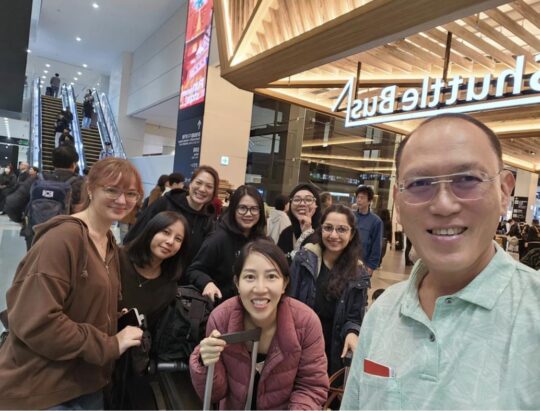
Touchdown. A tired but excited bunch at the Fukuoka Airport.
The first day was intentionally an easy paced one as we were reaching early in the morning after an overnight flight and were expecting to be tired. By touchdown we were excited to head to our first spot, which was the Fukuoka Prefectural Museum of Art. While their permanent exhibits had been put away to make room for the graduating class exhibition of the local art university, which was disheartening at first, the day quickly picked up as we made our way through the show. The works on display demonstrated excellent skill and gave us a glimpse into what the contemporary art environment in Fukuoka is interested in today. What initially felt like a missed opportunity soon became a valuable learning experience. As art history students, we are always curious about the contemporary culture of the places we visit, and what better way to
experience it than by immersing ourselves in the work being created by the next generation of artists? We moved on to the Fukuoka City Museum in the afternoon, where we got to experience a lot of cultural artefacts from the region’s rich history, starting off our trip with some historical context of Fukuoka’s culture. It was also a reminder that important art histories are not only found in large national museums, but also in regional institutions that preserve and present local stories.
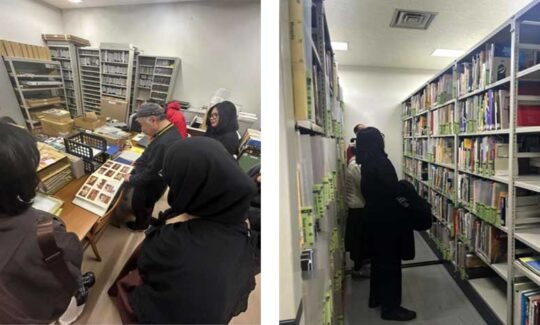
Exploring the Museum Library with Professor Masahiro Ushiroshoji.
A visit many of us had been looking forward to was the Fukuoka Asian Art Museum, which was slated for day two. As students of Asian art histories, we were excited to visit a museum dedicated to modern and contemporary art from across Asia, our very own area of study. We were fortunate to meet members of the curatorial team, who generously spoke with us about the museum’s collection, its evolution, exhibitions, and research. Hearing from them gave us a sense of how much thought goes into building a museum that speaks across different Asian contexts. We were also lucky to get a glimpse of the museum library with its rich collection of books and publications.
The highlight of the entire trip came on the second day as well, when we met Professor Masahiro Ushiroshoji, an expert in Asian art history from Japan and based in Fukuoka, long associated with Kyushu University’s Faculty of Humanities and the Fukuoka Asian Art Museum. He is renowned as the former chief curator of the Fukuoka Art Museum and Fukuoka Asian Art Museum, and as a key figure in initiating and curating the early Asian Art Exhibitions that helped shape the museum’s pan-Asian vision.
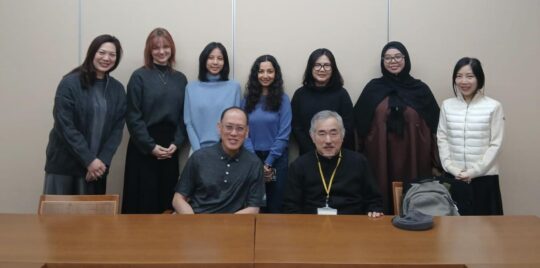
Professor Masahiro Ushiroshoji
Getting to speak with him, learn about the monumental effort that went into building and curating the museum’s collection, and discuss our own research interests with him was truly a goldmine of an opportunity. The meeting was followed by a visit to his personal library and research space, Bibliotheca Lizard, which he has built over decades and which he so freely and generously makes available to art researchers.
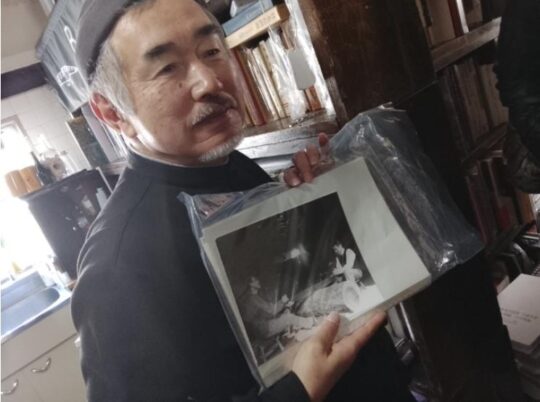
Professor Ushiroshoji showing us his research library space – Bibliotheca Lizard.
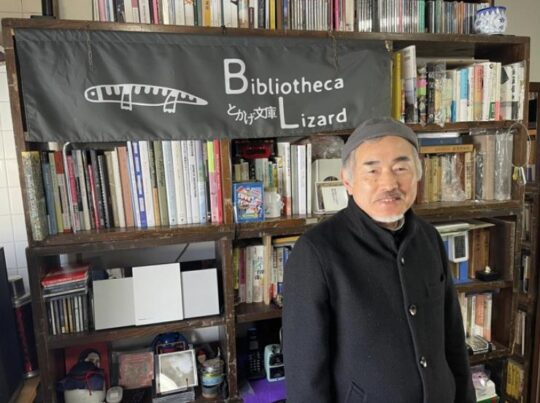
Professor Ushiroshoji showing us his research library space – Bibliotheca Lizard.
It was a wonderful place to visit—cosy and tightly packed with books and research materials, many of them rare or out of print, alongside beautiful artefacts gifted by artists personally known to the Professor and other fascinating ephemera that he was excited to tell us about and patient enough to answer our many questions on. A visit to his bibliothèque made each of us wonder what the physical embodiment of a lifelong passion might look like. It even inspired us to daydream a little about what our own versions of such a space might one day look like.
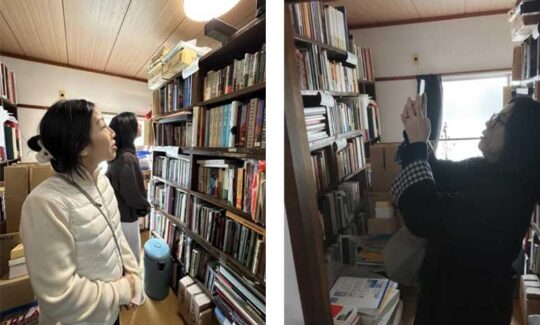
Exploring Professor’s Bibliotheca Lizard
Later that day, we visited the Fukuoka Art Museum, located beside Ohori Park. The picturesque setting by the pond alone was enough to captivate us. The museum’s collection brings together Japanese and international works, and our conversation with the curatorial team gave us a better understanding of the work that happens behind the scenes to bring these two together.
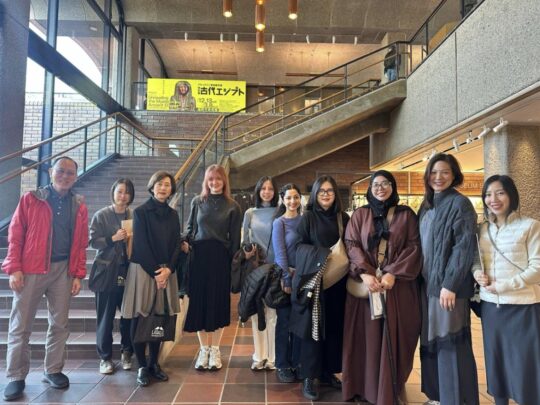
The group at the Fukuoka Art Museum at the Ohori Park, along with the curatorial team representatives.
After spending time in the galleries, stepping out into the open expanse of the park gave the day a gentler, slower rhythm. It was fascinating to think about everything involved in creating an exhibition, from selecting artworks to designing how visitors move through and experience the space.
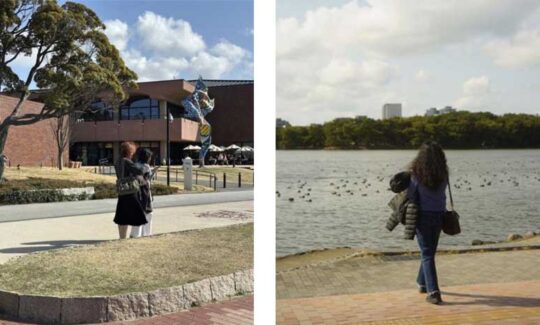
Parkside strolls after the museum visit.
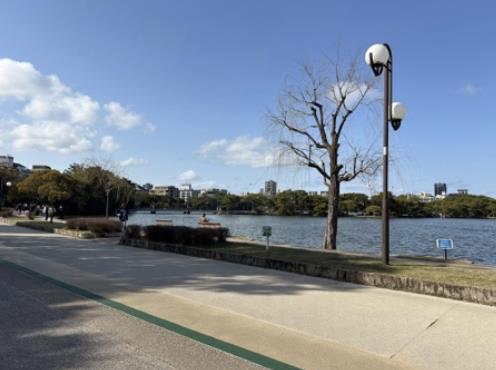
The Ohori Park Promenade
Beyond museums, we also spent time learning about Fukuoka’s older cultural traditions. At the Hakata Machiya Folk Museum, we encountered the history of the Hakata district through architecture, objects, and displays of everyday life. This was followed by a visit to the Hakata Traditional Craft and Design Museum, where local crafts such as Hakata dolls and textiles gave us a closer look at the city’s material culture. These visits were equally enjoyable as they showed another side of art history: one connected to homes, workshops, festivals and daily use, rather than only to galleries and museum walls.
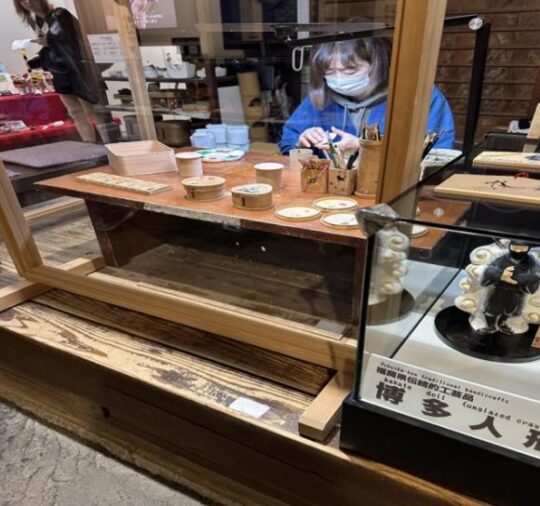
Craftwork in progress at the Hakata Machiya Folk Museum // Everyday Artefacts
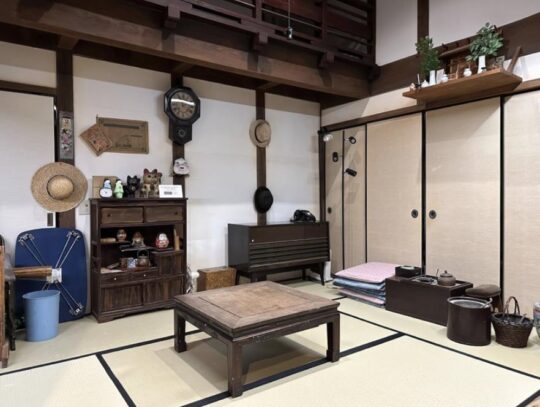
Craftwork in progress at the Hakata Machiya Folk Museum // Everyday Artefacts
We also explored some smaller gallery spaces in the Tenjin area. This part of the trip felt more relaxed, giving us plenty of opportunities to talk about the artwork we had seen and to discuss what resonated with each of us. Moving between different galleries gave us a sense of Fukuoka’s contemporary art scene and the conversations taking place outside the city’s larger institutions. It was a lovely way to experience Fukuoka, wandering its streets and encountering art in smaller, more intimate spaces. Travelling as a small group of seven also gave us the flexibility to explore the city at this slower pace and make the most of these spontaneous discoveries.
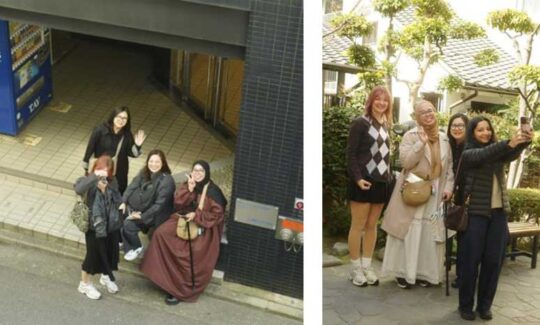
Always made sure that there was always time for some fun and photos along the way.
The second highlight of the trip for us was the Kyushu National Museum in Dazaifu. The journey there, about an hour from central Fukuoka, also gave us a chance to see a different part of the region and some gorgeous sceneries. At the museum, we were treated to a curator-led tour, which introduced us to the museum’s focus on the long history of cultural exchange between Japan and other parts of Asia. This was especially meaningful for our cohort, as many of our classes explore movement, contact and exchange across Asian cultures. Seeing these ideas brought to life through art and artefacts made them feel much more tangible.
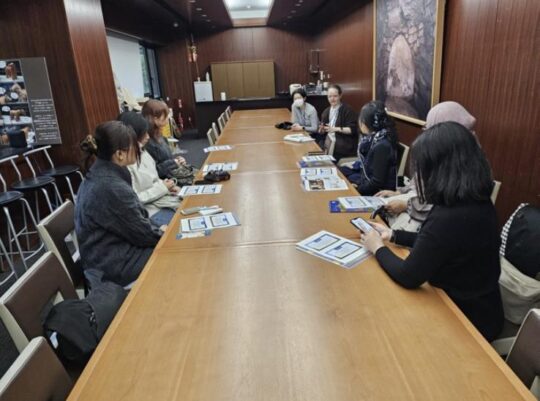
Speaking to the in-house team at the Kyushu National Museum in Dazaifu.
A distinguishing part of this visit was learning about the museum’s architecture, its environmental control systems, and the many ways it protects valuable artworks, including its earthquake-resistant design. We were also introduced to its innovative use of cutting-edge technology, not only to exhibit rare artefacts but also to make them more interactive and engaging through thoughtfully designed displays and communication tools. The museum gave us an invaluable glimpse into how art history can be brought to life using modern technology to make collections more accessible while also revealing things about historical artefacts that were previously impossible to see. Thermal imaging, for example, can uncover hidden crevices within objects and artefacts that are centuries old. We were also intrigued by the use of 3D-printed replicas of rare artefacts, allowing visitors to touch and learn through sensory experience without putting the originals at risk. All of this was eye-opening and got us thinking about what transdisciplinary approaches might enable us to achieve in the future.
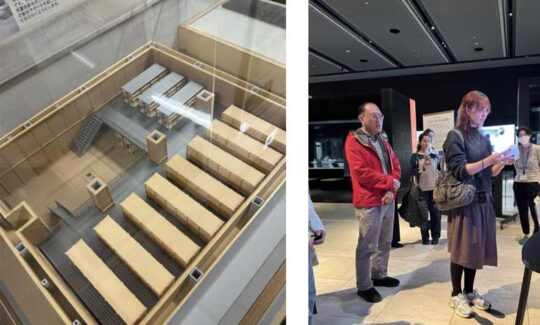
Model of the museum architecture and its innovative storage facilities // The group trying out new ways of interacting and learning about displayed artefacts.
In the end we also had the time to visit the Dazaifu Tenmangu Shrine. The shrine, dedicated to learning and scholarship, felt like a fitting stop for a group of graduate students. The walk towards it, lined with shops and visitors, was lively and the grounds gave us our cherry blossoms in early bloom.
Food was also a big part of the trip. From quick meals between museum visits to dinners after long days of walking, Fukuoka offered many small pleasures. We tried delicious bowls of udon and freshly made onigiri at some excellent local spots, and spent plenty of time exploring shopping arcades and department store food halls in search of souvenirs to bring home.
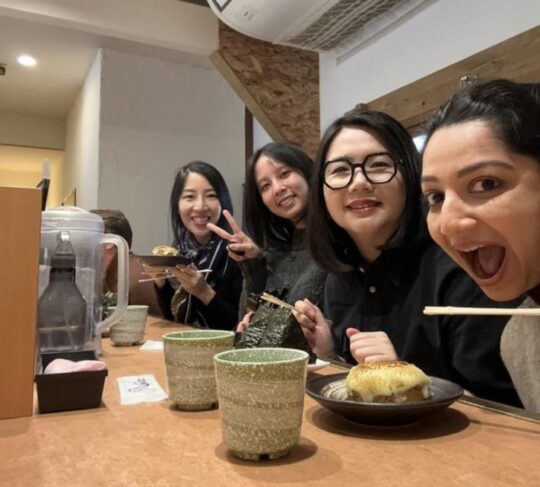
Food in Japan is Art after all.
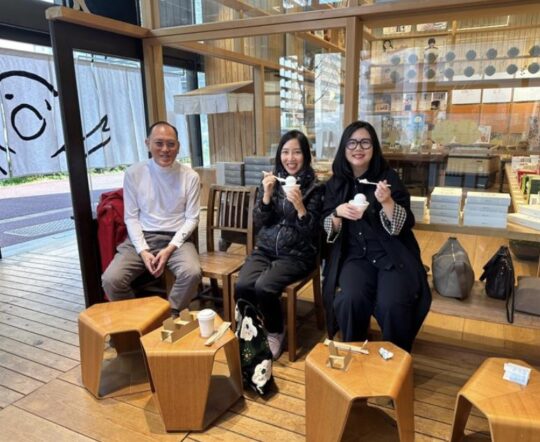
Food in Japan is Art after all.
The city was easy to navigate, yet full of little details to appreciate quiet parks, neat streets, cosy cafés, museum bookshops and charming shopfronts tucked between train stations. Compared to larger cities, Fukuoka had a gentler pace, which made it a wonderful place for a study trip. It encouraged us to slow down and pay attention. Together with the galleries and museums, these everyday experiences gave us a glimpse of Fukuoka’s art scene paired with the rhythm of life in the city.
Looking back, this trip was a way to explore an extensive list of museums and galleries while also encountering art in many other forms: craft traditions, shrine spaces, city streets, and conversations with curators and amongst ourselves. For us as MA Asian Art Histories students, it was a meaningful opportunity to learn beyond the classroom and to experience how art histories continue to live within the spaces of a contemporary city.